Notebooks & Journals
5 Notebooks for Left-Handed Writers, Ranked on Where the Binding Sits
Left-handed writers get told to change their pen. The notebook does at least as much damage, and two things decide it: where the binding is, and how fast the paper lets ink dry.
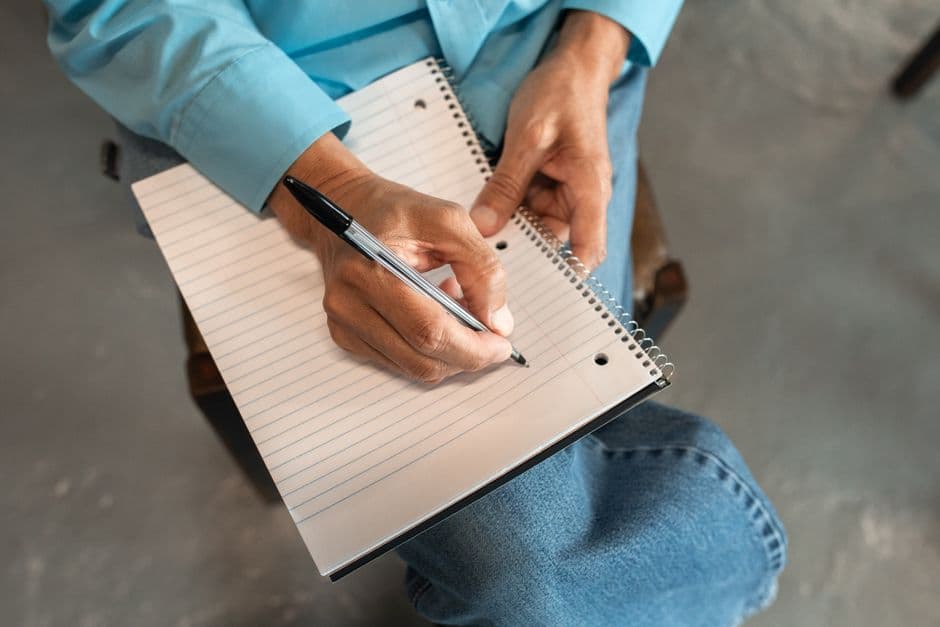
How this page is funded. Buying through a link here earns us a commission at no extra cost to you. It does not change what we recommend or the order we recommend it in, and we have not handled these products ourselves — see how we pick and the full disclosure.
The short answer
Buy a top-bound pad, and avoid side-bound spirals. A wire along the top edge is nowhere near your writing hand; a wire along the left edge is exactly where the heel of a left hand rests for every line of every page. That one structural fact does more than any pen recommendation.
How we judged these, before any ranking
There is no such thing as a left-handed notebook, and anything sold as one is usually an ordinary notebook with a label. What exists is a set of structural properties that suit or obstruct a left hand, and all of them are published. This site has written in none of these books.
- Where is the binding? The first and largest question. Top-bound is ideal, sewn and bound is fine, side-bound spiral or wire is the format that hurts. It is published on every notebook worth buying.
- Does it lie flat? A left hand writing on the left-hand page of a book that will not stay open fights the spine on every line. Mechanical bindings guarantee it; one maker here publishes it for a sewn book.
- How fast does the paper let ink dry? This is the counter-intuitive one. Heavy, closed, expensive paper holds ink on the surface longer, which is exactly what a hand dragging across the line does not want. Lighter, more absorbent paper is better here.
- Is it small enough to turn? Rotating the page clockwise is the single most effective habit for a left-handed writer, and a smaller book turns on a crowded desk where an A4 pad does not.
Notice what that list does to the usual advice: the heaviest, most-recommended paper on this site is a drawback here rather than a feature. That is why this page ranks differently from notebooks for fountain pens, which ranks the same shelf on the opposite property.
Binding and paper, side by side
| Notebook | Binding position | Paper | For a left hand |
|---|---|---|---|
| Rhodia wirebound pad A5 | Top edge | Clairefontaine 80 g | Nothing under the hand at all |
| LEUCHTTURM1917 A5 | Sewn spine, opens flat | 80 gsm | No obstruction; stays open on its own |
| Moleskine Classic Large | Sewn spine | 70 gsm | Lightest paper here, so the quickest to dry |
| Field Notes 3-pack | Saddle-stitched | 90 gsm | Small enough to turn; heavy paper is slower to dry |
| Rhodia spiral A5+ | Left edge, side-bound | Clairefontaine 80 g | The wire sits under the writing hand |
Quick picks
Ranked for the person doing the buying. Every pick names who it is wrong for.
| # | Product | Best for | Price |
|---|---|---|---|
| 1 |  Rhodia Wirebound Notepad, A5, Dot Top-wirebound with micro-perforated sheets and a rigid back, which makes it the one on this page you can write on standing up. | A pad, not a notebook | $8.52 - View on Amazon #ad Price as of September 27, 2026. How this is funded |
| 2 | 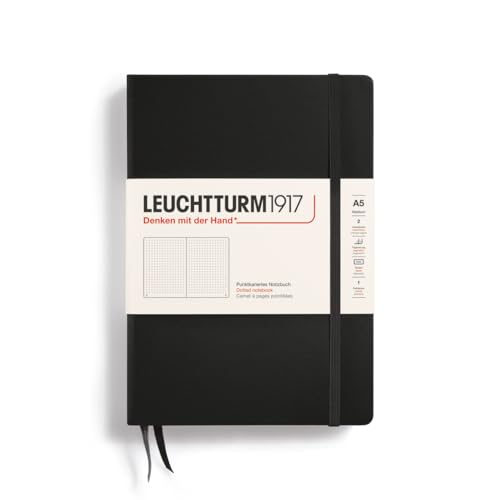 LEUCHTTURM1917 Medium A5 Dotted Hardcover Notebook 80 gsm paper, 251 numbered pages and a printed contents page, which is why this is the default recommendation in every journaling forum. | The bullet-journal standard | $25.50 - View on Amazon #ad Price as of September 27, 2026. How this is funded |
| 3 |  Moleskine Classic Notebook, Large, Dotted, Hard Cover The notebook everyone knows by sight, on 70 gsm paper that is lighter than its main rival and honest about it. | The recognizable one | |
| 4 | 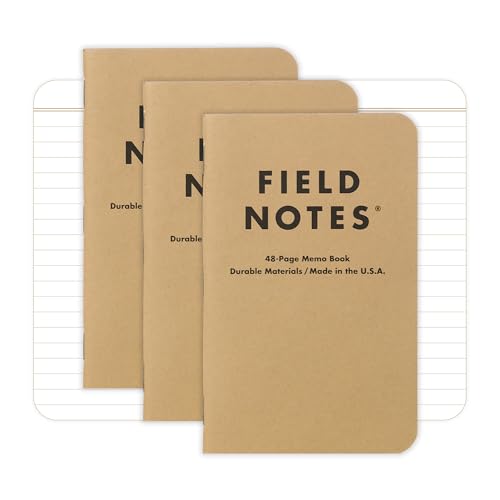 Field Notes Original Kraft 3-Pack, Ruled Three 48-page memo books on 90 gsm acid-free stock - the only pocket notebook here that states a paper weight at all. | A pocket book that publishes its paper | $12.95 - View on Amazon #ad Price as of September 27, 2026. How this is funded |
| 5 |  Rhodia Spiral Notebook, A5+, Ruled A side-spiral book on 80 gsm Clairefontaine with 160 detachable pages, which is the construction to buy when the page has to leave the book. | Pages you intend to remove |
1. A pad, not a notebook
Rhodia Wirebound Notepad, A5, Dot
Top-wirebound with micro-perforated sheets and a rigid back, which makes it the one on this page you can write on standing up.
#ad Price as of September 27, 2026. How this is funded
A top-bound pad is a genuinely different object from a side-bound notebook and the difference is where you can use it. The rigid back means it supports itself, so it works on a knee, in a corridor or standing at a bench - which is the same reason clipboards exist.
Micro-perforation is the detail that separates a pad from a notebook with a spiral. The sheet comes away along a clean line rather than a torn edge, so a page handed to somebody else does not look ripped out.
Eighty sheets is not many, and that is correct for the format. A pad is a consumable that gets torn down and replaced, not a book you archive.
| Binding | Wirebound at the top edgeA pad rather than a book - sheets flip up and over rather than turning sideways.Source: Amazon listing - Rhodia Wirebound Notepad, A5, Dot |
|---|---|
| Paper | Clairefontaine 80 g superfine vellumSource: Amazon listing - Rhodia Wirebound Notepad, A5, Dot |
| Sheets | 80, detachable and micro-perforatedSource: Amazon listing - Rhodia Wirebound Notepad, A5, Dot |
| Backing | Ultra rigid back boardThis is what lets it be used without a desk under it.Source: Amazon listing - Rhodia Wirebound Notepad, A5, Dot |
What it does well
- Rigid back means it works with no desk under it.
- Micro-perforated sheets tear off clean rather than ragged.
- Published 80 g Clairefontaine vellum, the same stock class as the brand's notebooks.
What it does not
- Eighty sheets goes quickly if you are not tearing them off.
- A top wire means your hand rests on it at the top of every page.
- Nothing holds the removed sheets - it is a pad, so filing is your problem.
Skip this: if you want to keep what you write in order. A pad is designed to be dismantled; if the notes need to stay bound and in sequence, buy a sewn or spiral notebook instead.
2. The bullet-journal standard
LEUCHTTURM1917 Medium A5 Dotted Hardcover Notebook
80 gsm paper, 251 numbered pages and a printed contents page, which is why this is the default recommendation in every journaling forum.
#ad Price as of September 27, 2026. How this is funded
Numbered pages plus a printed contents page is the whole reason bullet journaling settled on this book. An index needs page numbers, and printing them saves the user writing 251 of them.
80 gsm against the Moleskine Classic's published 70 gsm is a 14 percent difference in paper weight, and it is the difference most people notice as ghosting on the reverse of a page.
Two ribbons is not decoration in a journal that has an index. One marks the index, one marks today.
| Paper weight | 80 gsmSource: Amazon listing - LEUCHTTURM1917 Notebook Hardcover Medium A5, Dotted |
|---|---|
| Pages | 251 numbered pages, with 8 perforated detachable sheetsSource: Amazon listing - LEUCHTTURM1917 Notebook Hardcover Medium A5, Dotted |
| Size | A5, approximately 5.75" x 8.25" (145 x 210 mm)Source: Amazon listing - LEUCHTTURM1917 Notebook Hardcover Medium A5, Dotted |
| Fittings | Blank table of contents, two page markers, gusseted rear pocket, elastic band, archival stickersSource: Amazon listing - LEUCHTTURM1917 Notebook Hardcover Medium A5, Dotted |
| Binding | Thread bound, opens flatSource: Amazon listing - LEUCHTTURM1917 Notebook Hardcover Medium A5, Dotted |
What it does well
- 251 pre-numbered pages and a blank contents page, ready for an index.
- 80 gsm published, the heaviest of the three mainstream hardcovers here.
- Thread bound, so it lies flat from the first page.
What it does not
- Still not fountain-pen-proof; 80 gsm reduces show-through, it does not eliminate it.
- The dot grid is fainter than some users want for straight-line work.
Skip this: if the recipient has never mentioned journaling. A 251-page dotted notebook handed to a non-journaler is 251 blank pages of obligation. See how to pick a journal as a gift.
3. The recognizable one
Moleskine Classic Notebook, Large, Dotted, Hard Cover
The notebook everyone knows by sight, on 70 gsm paper that is lighter than its main rival and honest about it.
70 gsm versus 80 is the entire technical argument between this and the Leuchtturm1917, and it is a real one: lighter paper shows more of what is on the reverse. Whether that matters depends entirely on what the recipient writes with.
What Moleskine has that its rival does not is recognition. For a gift that is worth something concrete - the recipient knows what it is before they open the card.
No page numbers and no contents page. For freeform notes that is irrelevant; for an indexed journal it is 240 numbers to write by hand.
| Paper weight | 70 gsmMoleskine publishes this, and it is 10 gsm under the Leuchtturm1917.Source: Amazon listing - Moleskine Classic Notebook, Large, Dotted, Hard Cover |
|---|---|
| Pages | 240Source: Amazon listing - Moleskine Classic Notebook, Large, Dotted, Hard Cover |
| Size | Large, 5" x 8.25"Source: Amazon listing - Moleskine Classic Notebook, Large, Dotted, Hard Cover |
| Paper stock | FSC certified, acid free (pH neutral)Source: Amazon listing - Moleskine Classic Notebook, Large, Dotted, Hard Cover |
| Page numbers | Not publishedPages are not numbered and there is no printed contents page. A bullet journal user will number them by hand. |
What it does well
- Universally recognized, which does real work in a gift.
- FSC certified, acid-free paper with a published weight.
- Slightly thinner block than the Leuchtturm for the same page count, so it carries better.
What it does not
- 70 gsm ghosts more than 80 gsm with gel and fountain pens.
- No pre-numbered pages or contents page.
Skip this: if you know they use a fountain pen. Buy the Rhodia at 90 gsm instead and spend the difference on ink. See Leuchtturm1917 versus Moleskine.
4. A pocket book that publishes its paper
Field Notes Original Kraft 3-Pack, Ruled
Three 48-page memo books on 90 gsm acid-free stock - the only pocket notebook here that states a paper weight at all.
#ad Price as of September 27, 2026. How this is funded
Ninety gsm in a pocket notebook is genuinely unusual and it is the entire reason this is the first pick. Pocket books are normally where paper quality goes to die - thin stock, because nobody expects to check. This one publishes the same weight class as the site's top full-size recommendation.
Forty-eight pages per book sounds slight and is the correct size for the format. A pocket notebook is a capture device; it gets filled in a few weeks and replaced, which is why they are sold in threes.
Acid-free matters more here than the page count. These are the notes you transcribe later, and a saddle-stitched book that yellows in a drawer defeats the purpose of having captured anything.
| Paper weight | 60 lb (90 gsm) Finch Opaque, acid freeThe same weight class as the Rhodia Webnotebook, in a book a fraction of the size.Source: Amazon listing - Field Notes Original Kraft 3-Pack |
|---|---|
| Size | 3.5" x 5.5"Source: Amazon listing - Field Notes Original Kraft 3-Pack |
| Pages | 48 per book, ruledThree books in the pack, so 144 pages in total.Source: Amazon listing - Field Notes Original Kraft 3-Pack |
| Printing | Soy-based inkSource: Amazon listing - Field Notes Original Kraft 3-Pack |
What it does well
- 90 gsm published, which no other pocket notebook in this comparison states.
- Acid-free, so a filled book survives being kept.
- Three to a pack, which matches how the format is actually used.
What it does not
- 48 pages goes fast if you write more than a few lines a day.
- Ruled only in this pack - no dot grid option here.
- Saddle-stitched rather than bound, so it will not lie flat when new.
Skip this: if what you want is one book that lasts a year. This is a consumable bought three at a time, and somebody expecting a single durable journal will find it slight. Buy an A5 hardcover instead - see notebooks for writers.
5. Pages you intend to remove
Rhodia Spiral Notebook, A5+, Ruled
A side-spiral book on 80 gsm Clairefontaine with 160 detachable pages, which is the construction to buy when the page has to leave the book.
Spiral binding does two things a sewn book cannot: it opens completely flat from the first page, and it folds back on itself so the book takes half the desk. On a small desk or a train table that is the whole argument.
Detachable pages are the other half. A sewn notebook punishes you for removing anything - the facing page loosens and eventually falls out. A spiral book is designed to give pages up, which is why it suits meeting notes you hand over and drafts you file.
The cost is the spiral itself. It catches on bag linings, it flattens if the book is dropped on the wire, and writing on the left-hand page means your hand rests on metal.
| Binding | Spiral, full binding, side boundOpens fully flat and folds back on itself, which no sewn hardcover does.Source: Amazon listing - Rhodia Spiral Notebook A5+ |
|---|---|
| Paper | Clairefontaine 80 g/m2Source: Amazon listing - Rhodia Spiral Notebook A5+ |
| Pages | 160, detachableSource: Amazon listing - Rhodia Spiral Notebook A5+ |
| Size | A5+Slightly larger than standard A5, which is worth knowing if it has to fit a sleeve.Source: Amazon listing - Rhodia Spiral Notebook A5+ |
| Cover | Soft, resistant coated cardSource: Amazon listing - Rhodia Spiral Notebook A5+ |
What it does well
- Opens flat from page one and folds back on itself.
- 160 detachable pages on published 80 gsm Clairefontaine stock.
- Coated card cover shrugs off desk wear better than plain card.
What it does not
- The wire snags in a bag and bends if the book is dropped on it.
- A left-handed writer rests a hand on the spiral on every right-hand page.
- A5+ rather than true A5, so sleeves and covers sized for A5 will not fit.
Skip this: if the notebook is a keepsake. Spiral bindings are working bindings - they are built to give pages up and to be replaced, not to sit on a shelf for twenty years.
The wire is the whole problem
On a side-bound spiral, the binding runs down the left edge of the page. A right-handed writer starts to the right of it and never touches it. A left-handed writer rests the heel of the hand directly on it, on the left-hand page, for every line - and then has to lift over it on the facing page.
This is not a preference and it is not a small irritation; it is the single most common complaint left-handed writers have about notebooks, and it is entirely fixed by buying a book bound anywhere else. A top-bound pad puts the wire above the writing, where no hand goes.
The spiral is still on this list, last, because plenty of people already own one and because it is an excellent notebook in every other respect. Knowing why it annoys you is worth more than pretending it does not exist.
Why the lightest paper ranks well here
Everywhere else on this site, heavier paper wins. Here it works against you. Ink that has not soaked into the sheet has not dried, and a left hand travels across the line it has just written within a second or two of writing it.
So 70 gsm - the lightest paper on this site and the most-criticized - is genuinely an advantage for a left-handed writer using a gel or fountain pen, because it takes the ink down into the fibers faster. The trade is show-through on the reverse, which is a real cost and stated on the card.
The bigger lever is the pen rather than the paper. A ballpoint is effectively dry on contact and removes the problem entirely - pens for left-handed writers ranks the field on exactly that.
What does not help
- Anything sold as a left-handed notebook without stating a binding position. The label is not a specification.
- A heavier, more expensive book. On this one page, that makes drying worse rather than better.
- A bigger book. Rotating the page is the habit that helps most, and a large pad cannot be turned on a normal desk.
- Blaming the pen alone. The pen matters and so does the binding; fixing one and not the other leaves half the problem in place.
Questions people actually ask
What notebook is best for left-handed writers?
A top-bound wirebound pad. The wire sits along the head of the page, so nothing is under your hand, and it lies completely flat from the first sheet.
Are spiral notebooks bad for left-handers?
Side-bound ones are, and it is the most common complaint: the wire runs down the left edge, exactly where the heel of a left hand rests. Top-bound spirals and pads have no such problem.
Do left-handed notebooks exist?
Not as a real category. What helps is a binding that is not on the left edge, a book that lies flat and paper that lets ink dry quickly - all of which are published specifications on ordinary notebooks.
Is heavier paper better for left-handed writers?
Usually not. Heavy, closed paper keeps ink on the surface longer, and a left hand crosses the line seconds after writing it. Lighter, more absorbent paper dries faster - the trade is more show-through.
What else reduces smudging?
A ballpoint, which is effectively dry on contact, and rotating the page clockwise so the line runs away from the hand. See pens for left-handed writers.